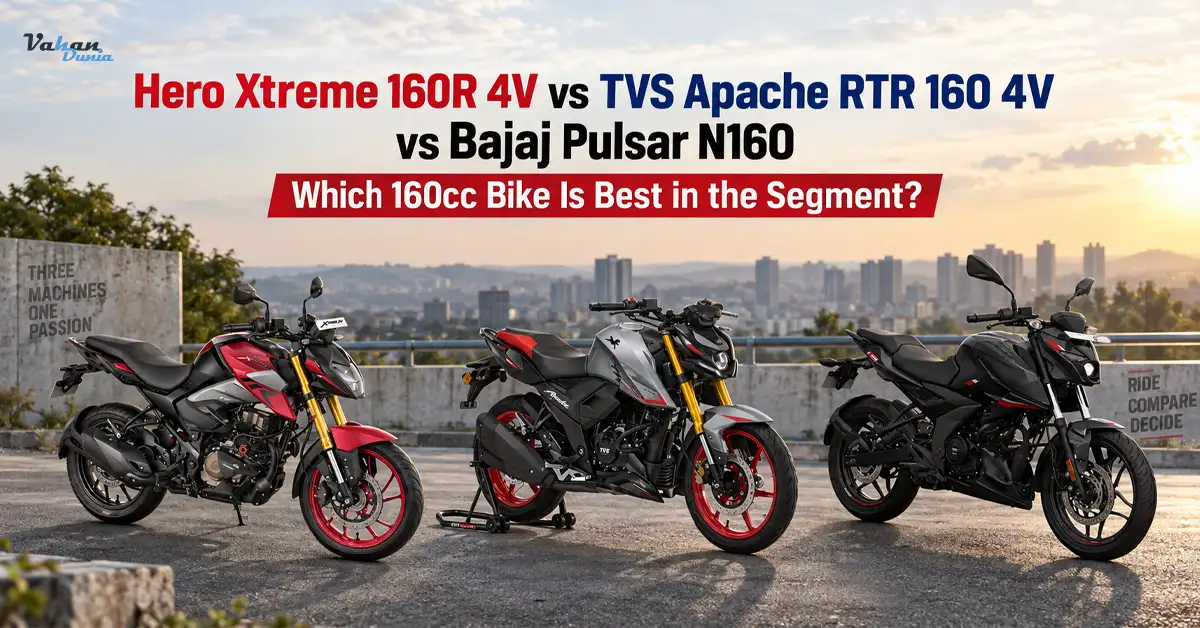
Hero Xtreme 160R 4V vs TVS Apache RTR 160 4V vs Bajaj Pulsar N160 Comparison
In India, demand for sporty 160 cc motorcycles with daily usability, eye-catching design, a powerful engine, and the latest innovations has grown over the last few years. This segment is a favourite for young riders, office commuters and enthusiasts looking for an exciting motorcycle that doesn't break into a higher engine category.
Some popular bikes to consider are the Hero Xtreme 160R 4V, TVS Apache RTR 160 4V and Bajaj Pulsar N160. Both come with varying levels of performance, design, technology and rideability. With the 2026 upgrade, Hero has now added cruise control, ‘ride-by-wire' and, on the top variant, a TFT display to the Xtreme. TVS is sticking to its racing-themed Apache range; meanwhile, Bajaj has added more powerful 4-valve variants to the Pulsar N160 range.
But the decision of which is the best motorcycle isn't only determined by engine power. Reliability, performance, speed, and practicality are also significant. Let's take a closer look at the differences and similarities between the three motorcycles and determine which one might be the best option for you.
1. Which Bike is Better?
A significant aspect of the 160cc market is that buyers tend to be looking for something sporty and unique, and design has to fit the bill.
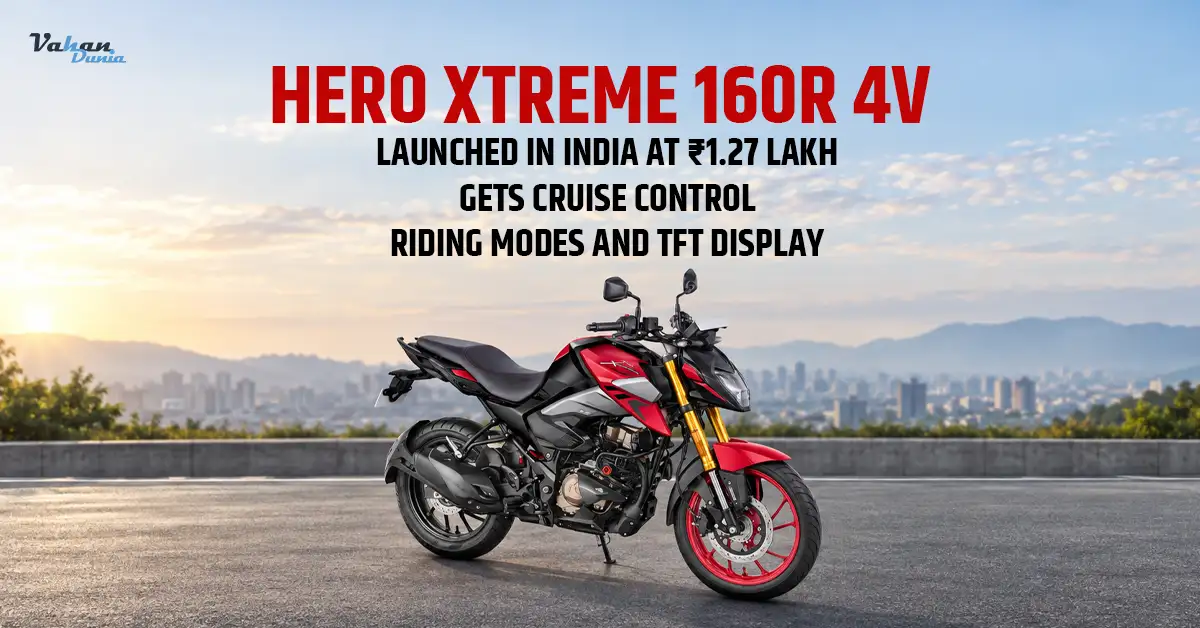
The Hero Xtreme 160R 4V features a sharp streetfighter design with muscular tank extensions, angular body panels and a compact rear section. The 2026 model features updated styling with Cybersharp styling, which makes it look fresher. The H-shaped daytime running light and LED tail lamp provide a unique identity, and the re-engineered fuel tank is designed to enhance knee grip.
The TVS Apache RTR 160 4V features a more racing-inspired look. It is a performance-oriented Apache family, as evidenced by its aggressive front end, sculpted fuel tank, sporty graphics and sharp bodywork. The headlamp on the projector and signature daytime running lights add to the show.
The Bajaj Pulsar N160 is built based on a muscular design philosophy. It has a wide, flat bottom and unique front lighting, plus a large size, which give it a powerful and grown-up appearance. It's a good choice for people who prefer a more imposing and larger-looking motorcycle on the road.
From the styling approach, the Hero is modern and compact, the Apache exudes a strong racing theme, and the Pulsar could be described as a streetfighter muscle car. It is not an objective winner, as the final selection will be subjective.
2. Engine and Performance: Which Motorcycle is more powerful?
One of the most crucial factors to consider when purchasing a sporty 160 cc motorcycle is its performance.
The Hero Xtreme 164.32cc single-cylinder, air/oil-cooled, four-valve engine powers the Xtreme. The new 2026 version puts out around 17.1PS at peak power at 8,750 rpm and 14.6 Nm of peak torque at 6,500 rpm. The five-speed gearbox sends power to the rear wheels, and Hero claims to accelerate from 0 to 60 kmph in 4.4 seconds.
The TVS Apache RTR 160 4V boasts a 159.7cc, single-cylinder, oil-cooled, four-valve engine. It produces 17.55 PS at 9,250 rpm and 14.73 Nm at 7,500 rpm in Sport mode. These modes are available to provide lower output for various riding conditions, including Urban and Rain. The Apache's engine is engineered to provide a sporty driving experience and responsive handling for those who enjoy a sporty riding style.
There is a need to differentiate between the variants of the Bajaj Pulsar N160. The proven 164.82 cc, two-valve engine delivers 16 PS and 14.65 Nm. S and SS models in the new Pulsar line are equipped with a 18.5 PS, 14.4 Nm, 164.5cc, oil-cooled, four-valve engine.
The newer four-valve Pulsar has the most peak power of these three motorcycles on paper. The Apache follows right behind, and the new Hero offers up a balanced power and torque package.
But 'peak' is not all. Other factors affect performance in the real world, such as throttle response, gearing, and smoothness of the engine and motorbike.
Verdict: The 4-valve Pulsar N160 S and 4-valve Pulsar N160 SS are the most powerful of the four models and are a great option for anyone who enjoys the sporty engine character the Apache RTR 160 4V offers. The Hero Xtreme 160R 4V outcompetes other models for everyday use and rapid acceleration.
3. What is offered by the features and technology of each one?
Technological advances have emerged as a key factor in the 160cc motorcycle market. Manufacturers have digital displays, riding modes, connectivity and electronic rider assistance now.
The revamped Hero Xtreme 160R 4V carries a much enhanced set of features. The Pro and Carbon versions are equipped with ride-by-wire throttle control, three riding modes (Rain, Road and Sport) and cruise control. The Carbon variant adds a 4.2-inch colour TFT screen, Bluetooth, turn-by-turn navigation, call and message alerts, and more riding data.
The TVS Apache RTR 160 4V also comes with a full set of equipment. Depending on the variant, up to a TFT display, navigation-related functions, riding modes, traction control and an assist-and-slipper clutch are available for the buyer. The projector headlamp and LED lighting are also a part of its high-end positioning. The newer Bajaj Pulsar N160 S and N160 SS feature electronic throttle control, four riding modes, traction control and crawl technology. The high-spec version of the SS will also have a 5-inch TFT console with Google Maps mirroring.
The Hero's cruise control is one of its key features, especially for those who ride on appropriate open roads from time to time. The Apache's sporty electronics add to its appeal to enthusiasts, while the latest Pulsar variants provide an even more competitive tech pack. Purchasers need to keep in mind that not all variants come with these features. Before deciding on a purchase, it's crucial to review the exact versions.
4. Suspension, Handling and Ride Comfort
A motorcycle should not only perform well but also remain comfortable on daily commutes and longer journeys. Suspension design, seat ergonomics, weight distribution and tyre selection all influence the riding experience.
The Hero Xtreme 160R 4V Standard features conventional telescopic front forks. The Pro and Carbon variants upgrade to 37mm KYB upside-down front forks and a rear monoshock with adjustable preload. These higher variants also receive dual-channel ABS, making them better equipped for riders seeking a more premium package.
The TVS Apache RTR 160 4V comes with conventional front forks on the entry-level version, while higher variants offer upside-down forks and a rear monoshock. Its sporty chassis and riding position are intended to provide responsive handling while retaining everyday usability.
The Pulsar N160 also offers different suspension setups across its range. Selected variants feature upside-down front forks, while other versions use conventional front suspension. Its muscular proportions and planted character may appeal to riders who prefer a more substantial-feeling motorcycle.
An upside-down fork can improve suspension performance and front-end feel, but it does not automatically guarantee greater comfort. Suspension tuning and seat cushioning are equally important.
For city commuters, all three motorcycles are worth considering. Riders who frequently encounter potholes or uneven roads should take a test ride and assess how each bike handles bumps at low and moderate speeds.
5. Braking & Safety: Which Bike Will Make You More Confident?
In the crowded Indian cities, braking performance is of utmost importance on motorcycles. Braking and rider assistance may be necessary to adjust to fast-changing traffic conditions and can be a key factor in ensuring predictable behaviour.
The Hero Xtreme 160R 4V comes with a 276mm front disc and a 220mm rear disc. The standard variant is equipped with ABS (single channel), whereas the Pro and Carbon variants are equipped with ABS (dual channel). Hero has also added the feature of Panic Brake Alert, which alerts nearby traffic when it brakes suddenly and hard.
The TVS Apache 4V RTR is equipped with a single-channel ABS on its entry-level version, and a dual-channel ABS on the higher variants. They also include an anti-lock braking system (ABS) on cumbersomely equipped variants, and an upside-down front fork in the latter.
The Bajaj Pulsar N160 range has a variety of braking setups based on the version. There is electronic riding assistance on the newer models and dual-channel ABS and traction control on higher-spec models.
If it's in budget for most buyers, a variant with dual-channel ABS is a consideration. The system is designed to prevent wheel lock-up when braking in severe conditions, but does not guarantee that there are no risks on slippery or loose surfaces.
In some instances, the traction control system offers further assistance when riding in a situation where grip would be an issue, but basic safety riding skills are important on any motorcycle.
6. Price and Value for Money
When shopping for a motorcycle, price can make all the difference, especially if you're comparing several different options.
The new Hero Xtreme 160R 4V is priced at an ex-showroom rate of ₹1.27 lakh (Standard), ₹1.37 lakh (Pro) and ₹1.41 lakh (Carbon) in Delhi. The Standard is the more economical version, while the more expensive options include cruise control, upgraded suspension and more advanced instrumentation.
The TVS Apache RTR 160 4V will go on sale from around ₹1.25 lakh ex-showroom Delhi for its single-channel ABS variant and will be priced lower for other configurations. The TVS Apache RTR 160 4V will be available on sale from ₹1.25 lakh onwards ex-showroom Delhi for its single-channel ABS variant and will be priced lower for other variants. The dual-channel ABS, upside-down forks and TFT display make the higher-spec version more expensive than the entry-level version.
The Bajaj Pulsar N160 also has a large range to choose from. The two-valve variants are priced at around ₹1.22 lakh ex-showroom Delhi while the newer four-valve N160 S and N160 SS are at ₹1,33,511 and ₹1,42,585 ex-showroom Delhi, respectively.
The prices are just tentative and are subject to changes in the variant, manufacturer changes and dealership incentives. After insurance, registration and any other applicable charges, on-road prices will be higher.
The Apache is a competitive start, the Hero packs a unique tech stack, and the Pulsar presents several options for buyers to choose from. The best value is based on what features are most important to you.
7. Mileage and Daily Practicality
As for fuel efficiency, it's a significant factor for Indian customers, particularly those relying on their motorcycles for daily commutes.
The mileage of the Hero Xtreme 160R, TVS Apache RTR 160 and Bajaj Pulsar N160 will vary according to the traffic conditions, riding style, maintenance and road conditions. Actual fuel economy can vary significantly from the manufacturer's or retailer's claimed or reported fuel economy.
Smooth acceleration, judicious selection of gears, and not accelerating too much will be useful for those who regularly ride through busy streets. Suggested tyre pressure and service intervals can also help achieve better fuel economy.
All three motorcycles deliver sporty performance for everyday use, with no need to move up to a larger engine class. The Hero's convenience options will likely be of interest to tech-focused commuters; the Apache styling will be more appealing to riders looking for a more interactive aspect; and the Pulsar's muscular design and configuration options will be of interest to those wanting a more aggressive option.
Before purchasing, factors such as range of daily travel, budget for fuel, pillion requirements, comfort of seat and availability of authorised service centres should be taken into account.
8. What should be the type of 160cc bike to choose?
There are several specifications that you could consider when choosing the right motorcycle for you, but it all boils down to what you want.
If you are looking for modern styling, a compact streetfighter profile and premium convenience features, then you should opt for the Hero Xtreme 160R 4V. If cruise control, ride-by-wire and advanced instrumentation are important to you, the Pro and Carbon models are interesting purchases.
If you're into sporty roadability, racing styling and roadability, the TVS Apache RTR 160 4V is the right choice for you. It boasts good engine performance and is equipped with traction control, assist and slipper clutch, and a TFT display, all of which make it attractive to enthusiasts.
Opt for the Bajaj Pulsar N160 if muscular styling and exploring various engine and equipment variants is what you want to do. If you are looking for maximum power and electronic features are a high priority, there are four-valve S and SS variants which are particularly worth considering.
Final decision: Best 160cc Bike in the Segment?
All three bikes – the Hero Xtreme 160R 4V, the TVS Apache RTR 160 4V and the Bajaj Pulsar N160 – make for a compelling mix of performance, good looks and practicality.
The Hero Xtreme 160R 4V is special in terms of its improved design, cruise control, and TFT fitted on the Carbon variant. Its attractive features make it a good option for people seeking a modern bike with unique convenience.
For those looking for a sporty engine, racing-themed design and a thrilling riding experience, the TVS Apache RTR 160 4V is a viable option.
The Bajaj Pulsar N160 is a design that appeals to buyers who favour a muscular appearance and more configurations. Its 'new' four-valve models also feature the highest power claimed of any of the motorcycles reviewed.
Overall, it’s all about your needs and the best bike for you. The Hero is a solid tech gamer, the Apache is an excellent performance name, and the Pulsar is a great example of power and muscle. Check the exact changes, validate the current street price and perform a test drive prior to the final decision.