Volkswagen Virtus Facelift: What’s New in Design, Features and Engine Options?
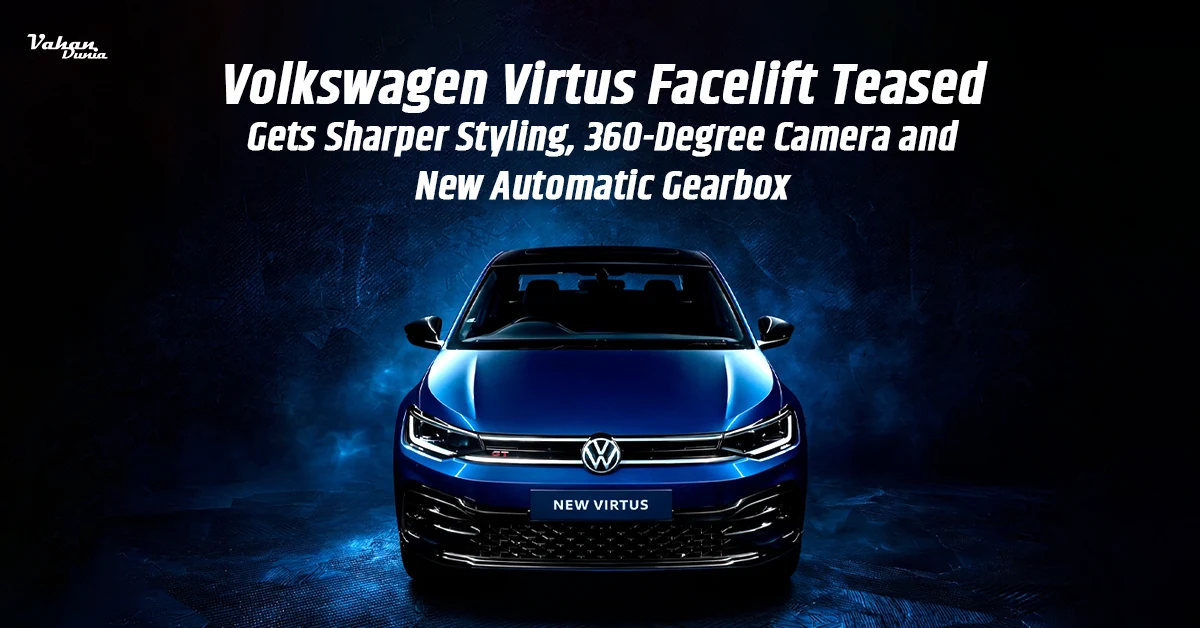
Volkswagen has officially teased the upcoming Virtus facelift for the first time, revealing several exterior design updates to its popular midsize sedan. This will be the first major update for the Virtus since its launch in India in June 2022. The upcoming model is expected to receive refreshed styling, additional features and a new automatic transmission option. The teaser highlights changes to the front and rear design, including redesigned headlights, tail lights, grille, front bumper and alloy wheels. Volkswagen is also expected to introduce some feature upgrades similar to those recently offered with the updated Taigun. In the new front design, the fog lamps, grille, Volkswagen badge, and the GT badge have all been updated. In the headlight design, there are now smaller LED lights positioned under the main light unit. The daytime running light (DRL) design remains the same, but the chrome connecting pieces between the headlights carry over from the current model. New black wheels have been added on the sides, and other trims might feature a two-tone design, though 16-inch wheels will likely still be the norm. In addition, a 360-degree camera has been added, and the exterior rear-view mirrors (ORVMs) are where the cameras are now. Finally, in the back of the car, there is a redesign of the taillights, which now incorporate updated LED elements. There was also minimal change made to the rear bumper and boot-lip spoiler. Beyond cosmetic updates, Volkswagen may also include additional features in the new Virtus. Although the design of the dashboard will remain largely unchanged from the previous model, other upgrades will likely make the equipment list even more desirable. A larger 10.25-inch digital driver's display. A 360-degree camera system. An updated 10.1-inch touchscreen infotainment system. Improved user interface and integrated AI functions. A revised climate control compressor for better cooling. Features such as ventilated and powered front seats, a single-pane sunroof and wireless phone charging are expected to continue. The Volkswagen Virtus facelift is expected to retain its existing engine options. The 1.0-litre TSI turbo-petrol engine produces 115hp, while the larger 1.5-litre TSI turbo-petrol engine delivers 150hp. However, the biggest mechanical update could be the introduction of a new 8-speed torque converter automatic gearbox with the 1.0-litre TSI engine, replacing the existing 6-speed automatic transmission. The 6-speed manual gearbox and 7-speed DSG automatic transmission with the 1.5-litre engine are expected to continue. The current Volkswagen Virtus is priced between ₹10.71 lakh and ₹19.20 lakh (ex-showroom). Prices are expected to increase with the facelift due to the additional design and feature upgrades. Once launched, the updated Virtus will continue competing against the Skoda Slavia, Hyundai Verna and Honda City. Overall, the Volkswagen Virtus facelift is expected to bring meaningful improvements to the sedan while retaining its existing engine lineup and overall design identity.Volkswagen Virtus Facelift: Exterior Design Changes
Upgrade Expectations
Expected updates include:
Engine and Gearbox Options
Expected Price and Rivals