
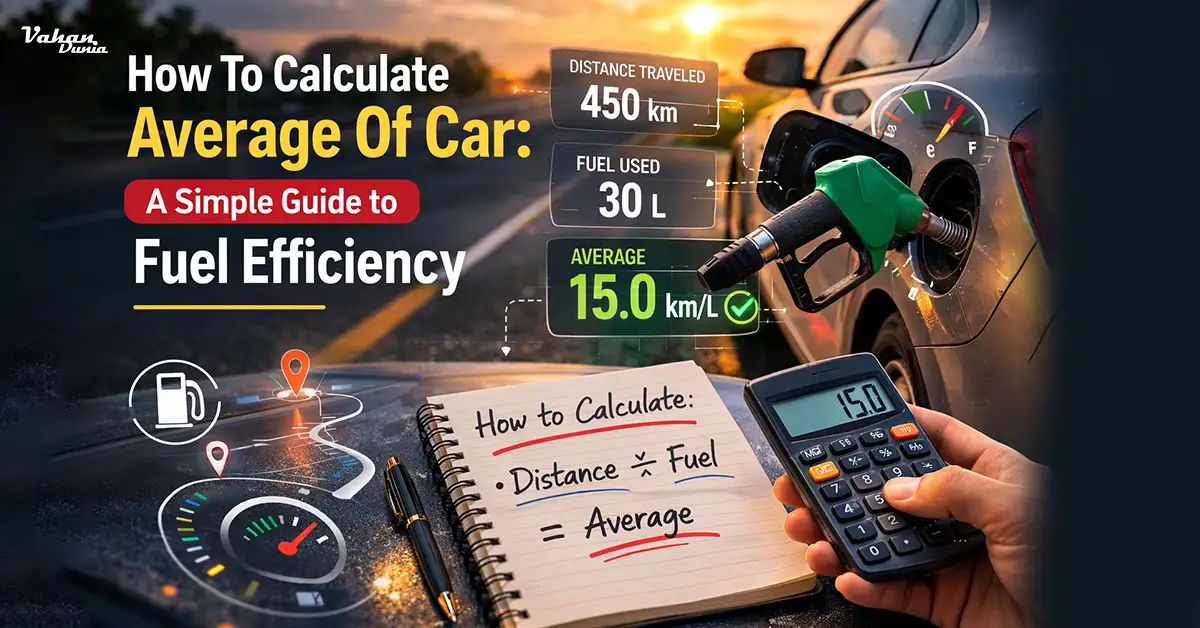
One of the most important factors that consumers consider when owning a car is fuel efficiency. Whether you are going on a long journey or commuting to work, knowing the mileage of your vehicle can help you understand the fuel consumption of your car. The question of how to calculate the average of a car is commonly asked by many drivers so they can monitor fuel efficiency and manage fuel costs better.
In this guide, we will explain how to calculate a car’s average (mileage) step-by-step in a simple way.
What is the Car Average?
The average of a car, also known as fuel efficiency or mileage, is the number of kilometres a car can travel using one litre of fuel.
Example:
- If a car travels 15 km using 1 litre of petrol or diesel, the car’s average is 15 km/l.
A higher mileage means the car uses less fuel, which saves money and improves efficiency.
Simple Formula to Calculate Car Average
Car Average (km/l) = Total Distance Travelled ÷ Fuel Consumed
Example:
- Distance travelled = 300 km
- Fuel used = 20 litres
Car Average = 300 ÷ 20 = 15 km/l
This means the car delivers 15 kilometres per litre.
Step-by-Step Method to Calculate Car Mileage
Step 1: Fill the Fuel Tank
First, fill your car’s fuel tank completely. This ensures accurate measurement.
Step 2: Reset the Trip Meter
Reset the trip meter on the car dashboard to zero.
Step 3: Drive Normally
Drive your car normally for a certain distance. For better accuracy, drive at least 100–200 km.
Step 4: Refill the Tank
After driving, refill the tank completely again.
Step 5: Note the Fuel Used
Check how many litres of fuel were added while refilling.
Step 6: Apply the Formula
Average = Distance Travelled ÷ Fuel Used
This will give you the actual mileage of your car.
Example of Car Mileage Calculation
Let’s understand with a simple example.
- Distance travelled = 250 km
- Fuel used = 16 litres
Car Mileage = 250 ÷ 16 = 15.6 km/l
So, the car’s fuel efficiency is 15.6 kilometres per litre.
Factors Influencing Car Fuel Economy
Several factors can affect your car’s mileage.
Driving Style
Aggressive driving, sudden acceleration, and frequent braking can reduce fuel efficiency.
Traffic Conditions
Heavy traffic and frequent stops increase fuel consumption.
Vehicle Maintenance
Poorly maintained engines, dirty air filters, and low tyre pressure can reduce mileage.
Road Conditions
Driving on rough roads, hills, or uneven surfaces can lower fuel efficiency.
Vehicle Load
Carrying heavy loads or too many passengers can increase fuel consumption.
Tips to Improve Car Mileage
- Maintain proper tyre pressure.
- Avoid rapid acceleration and braking.
- Service the engine regularly.
- Remove unnecessary extra weight.
- Drive at a steady speed.
- Use the correct engine oil.
Following these habits can help improve the average mileage of your car.
Importance of Knowing Your Car Average
- Track fuel expenses
- Plan long trips better
- Detect engine or maintenance issues
- Improve driving habits
Regularly checking your car’s mileage ensures your vehicle is running efficiently.
Conclusion
Calculating the average of a car is simple and helps drivers understand fuel consumption and vehicle performance. By dividing the total distance travelled by the fuel consumed, you can easily determine your car’s mileage.
Monitoring your car’s fuel efficiency not only helps you save money but also ensures your vehicle remains properly maintained. With good driving habits and regular maintenance, you can achieve better mileage and improved fuel efficiency.