
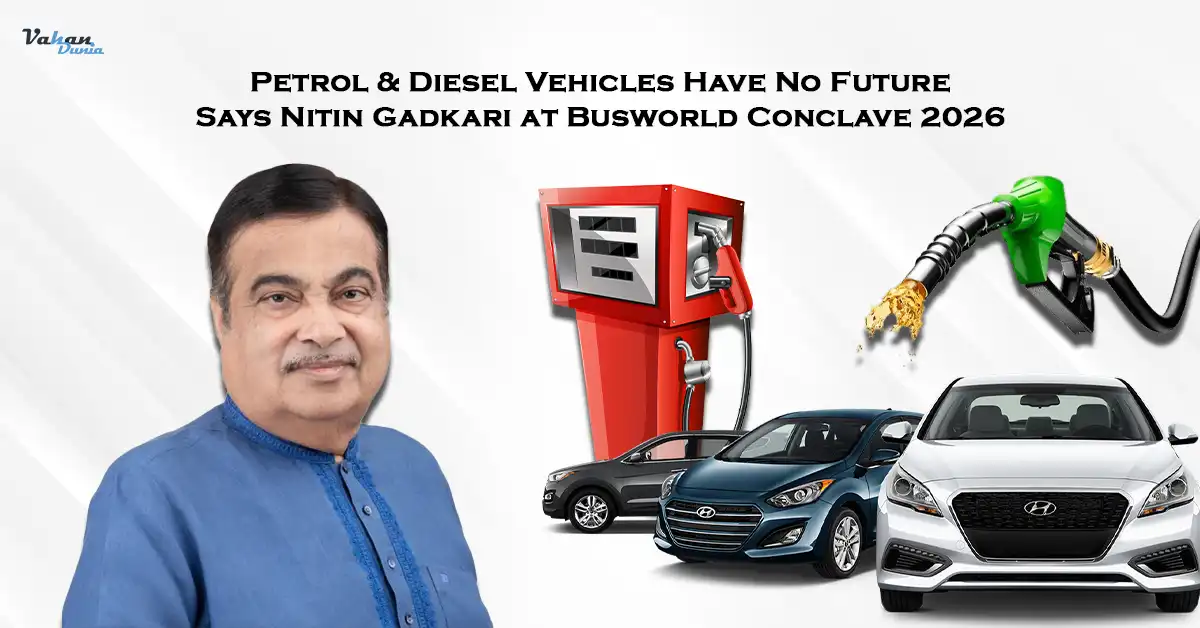
Petrol & Diesel Vehicles Have No Future, Says Nitin Gadkari at Busworld Conclave 2026
New Delhi: The future of transport and mobility is undergoing a transformative shift in India, with Union Minister Nitin Gadkari announcing that petrol and diesel cars “don’t have a future”. Addressing the Busworld Conclave 2026, the minister explained that traditional fuels may come to an end, but blended and alternative fuels will emerge.
Shift Towards Cleaner Mobility
The country has been keenly embracing greener mobility options. It is encouraging the use of fuels such as E85 (85% ethanol blended petrol) and is experimenting with fuels such as Iso-diesel (Isobutanol blended diesel). In his speech, Gadkari said that by 2025, India will say bye to 100% petrol and diesel and switch to a cleaner, blended fuel.
‘No Future for Petrol & Diesel Engines’
In his speech, Gadkari said:
“One thing is for sure… There is no future for diesel and petrol engines.”
His remarks were made in relation to public transport, but it is indicative in the sense of cars, too. The message to the industry is to expedite the shift to cleaner technologies.
Why Is India Moving Away from Fossil Fuels?
The government is clear on two fronts:
- Fuel Imports Are Costly: India is a major importer of crude oil, and geopolitical tensions- particularly in West Asia- have also jacked prices.
- Air Pollution: India’s megacities continue to suffer from severe air pollution, driving the need for cleaner fuel options.
Focus on Biofuels, EVs & Hybrid Vehicles
India’s transport strategies are likely to be dominated by:
- Biofuels: Ethanol fuel and flex-fuel will be important, given India’s extensive farming sector.
- Electric Vehicles (EVs): Early signs of strong uptake in metros.
- Hybrid Vehicles: Will likely be the transition from conventional to all EVs.
Iso-Diesel & New Fuel Innovations
Iso-diesel is being trialled as a new fuel. It is a mixture of diesel and Isobutanol, and is:
- Cleaner combustion
- Better lubrication
- Eco-friendly production from agri-waste such as sugarcane and grains
Hydrogen: The Fuel of the Future?
Gadkari also outlined the promise of green hydrogen for the long term. Green Hydrogen-powered trucks and buses are being trialled on some routes.
Major developments include:
- Adani Group’s ₹75,000 crore ($9 billion) investment in hydrogen infrastructure in Kutch
- A 40-tonne hydrogen-powered truck, developed in partnership with Ashok Leyland and Canada-based Ballard
If scaled effectively, hydrogen could power heavy commercial transport with zero emissions.
Boosting Public Transport Infrastructure
Apart from fuel transition, Gadkari stressed the importance of improving India’s public transport systems.
Key focus areas include:
- Better bus quality and safety standards
- Enhanced comfort and reliability
- Development of efficient bus-based transport networks
Strong public transport can significantly reduce traffic congestion and pollution.
The Bigger Vision for India’s Transport Sector
Gadkari’s roadmap for the future is built on three main pillars:
- Cost-Effective Mobility – Affordable transport for the masses
- Reduced Pollution – Cleaner fuels and lower emissions
- Energy Independence – Reducing reliance on fuel imports
Impact on the Auto Industry
The minister’s statement is a clear signal to the automotive sector. Automakers will need to:
- Invest in electric and hybrid technologies
- Develop alternative fuel vehicles
- Focus on sustainable mobility solutions
Conclusion
India is on its way to a mobility revolution. Old internal combustion engine (ICE) cars may not go out of fashion, but their future is probably bleak. And with increasing shifts to biofuels, electric vehicles, hybrids and hydrogen, India is paving the way for a greener, cleaner, and sustainable future of mobility.
The government is sending a strong message: The future of India’s mobility is alternative, electric and sustainable.