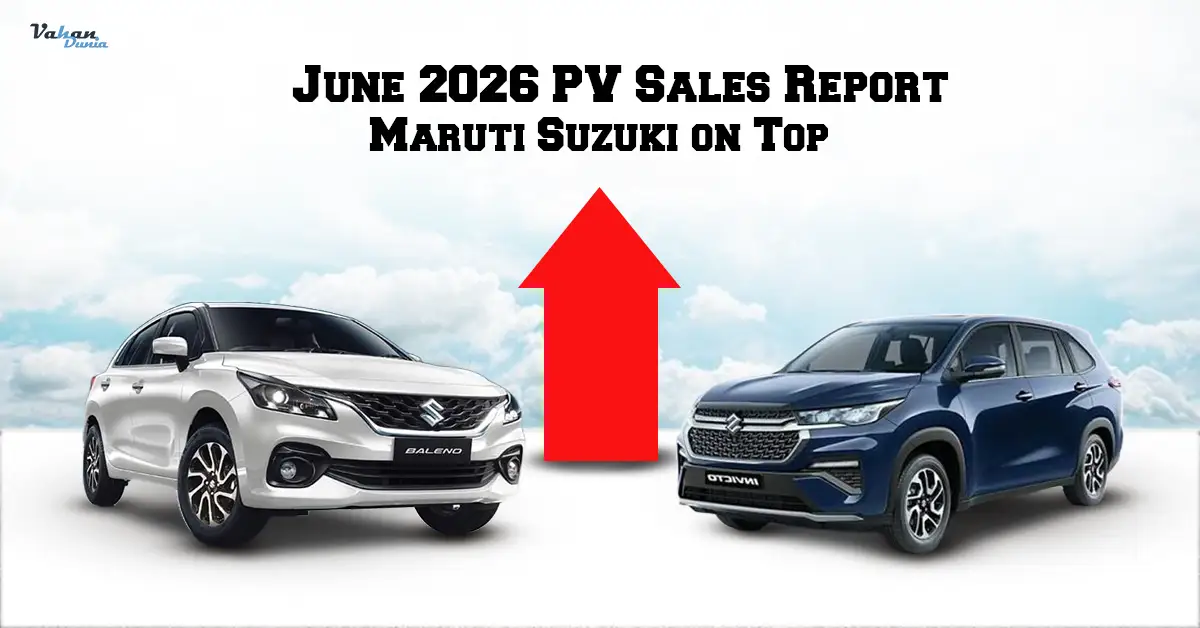
June 2026 Passenger Vehicle Sales in India: Complete Brand-Wise
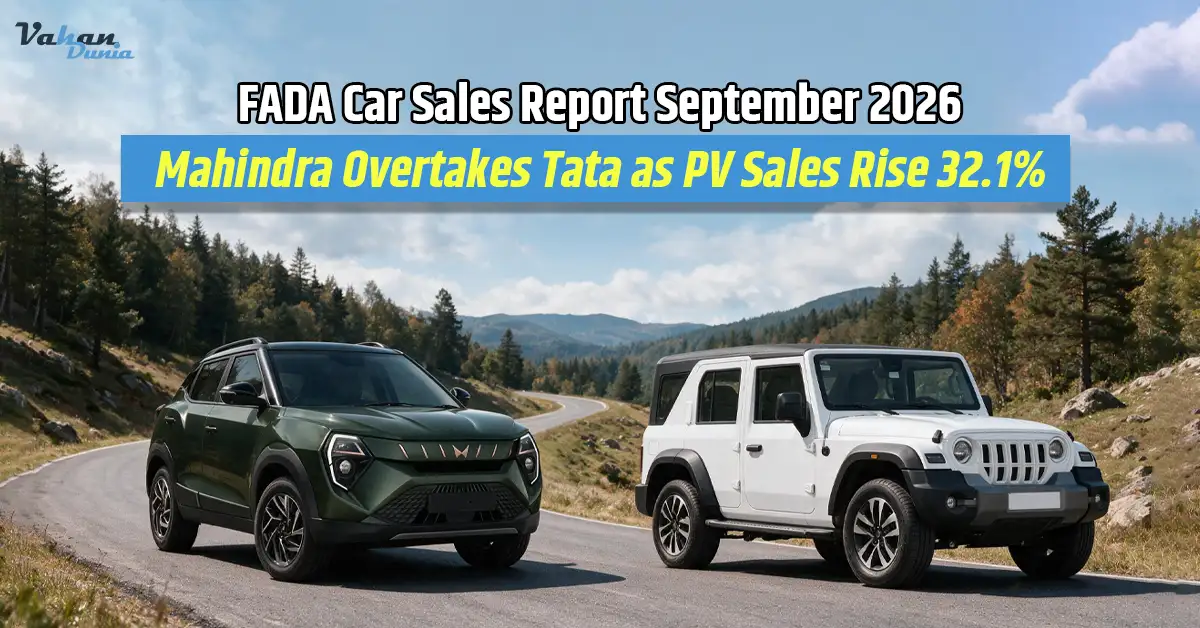
The Indian Passenger Vehicle (PV) industry had impressive growth in June 2026, with the total wholesale sales volume of 4,10,853 vehicles in comparison to 3,19,412 vehicles in June 2025. Overall, the industry has experienced an outstanding growth of 28.63% compared to the previous year on the strength of robust demand in the SUV, hatchback and premium vehicle segments.
However, Maruti Suzuki remains the leader.
Maruti Suzuki India Ltd. maintained its position as the top passenger car maker in the country with a June 2026 sales tally of 1,67,834 units compared to 1,22,775 in June 2025. The Market Share of the Company also saw a slight rise from 38.44% in 2010-11 to 40.85% in 2011-12, further strengthening its dominance in the PV market in India.
Tata Motors gets second place.
Tata Motors was the next biggest player in terms of volume with sales of 57,009, up from 37,731 in June 2025. The market share also rose considerably for the company from 11.81% to 13.88%.
Mahindra continues to show good performance.
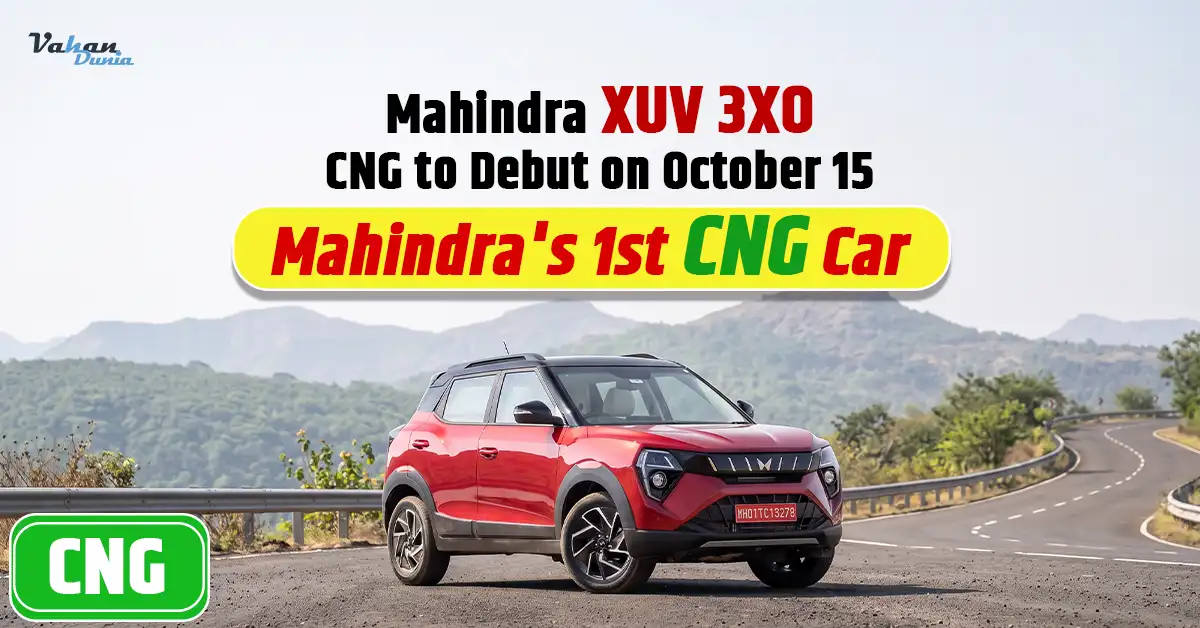
Mahindra & Mahindra sold 54,099 units in June 2026 compared with 44,249 units in the same period last year. Sales grew significantly, but with a slight drop in market share from 13.85% to 13.17% as a result of the more robust growth in the industry.
Hyundai and Toyota
Hyundai Motor India handed out 44,163 cars in contrast to 40,743 in June 2025. But its market share decreased from 12.76% to 10.75%.
Toyota Kirloskar Motor sold 28,818 units, as compared to 25,031 units the previous year. It lost a bit of ground with its market share dropping from 7.84% to 7.01%.
Kia, Volkswagen Group and JSW MG.
- Kia India sold 23,166 cars compared to 19,485 sold in June 2025. Kia India sold 23,166 cars in comparison to 19,485 sold in June 2025. Its market share has, however, dropped from 6.10% to 5.64%.
- The Skoda Auto Volkswagen Group sold 8,098 cars, down from 8,564 in June 2025, to grab 1.97% share of the market from 2.68%.
- JSW MG Motor India has sold 6,997 units against 5,768, and lowered its market share from 1.81% to 1.70%.
- Toyota's registration growth is driven by sales in Europe. Honda and Renault/Nissan register growth.
- Honda Cars India sold 4,833 vehicles, beating the figure of 4,230 vehicles a year ago. However, its market share fell from 1.32 per cent to 1.18 per cent.
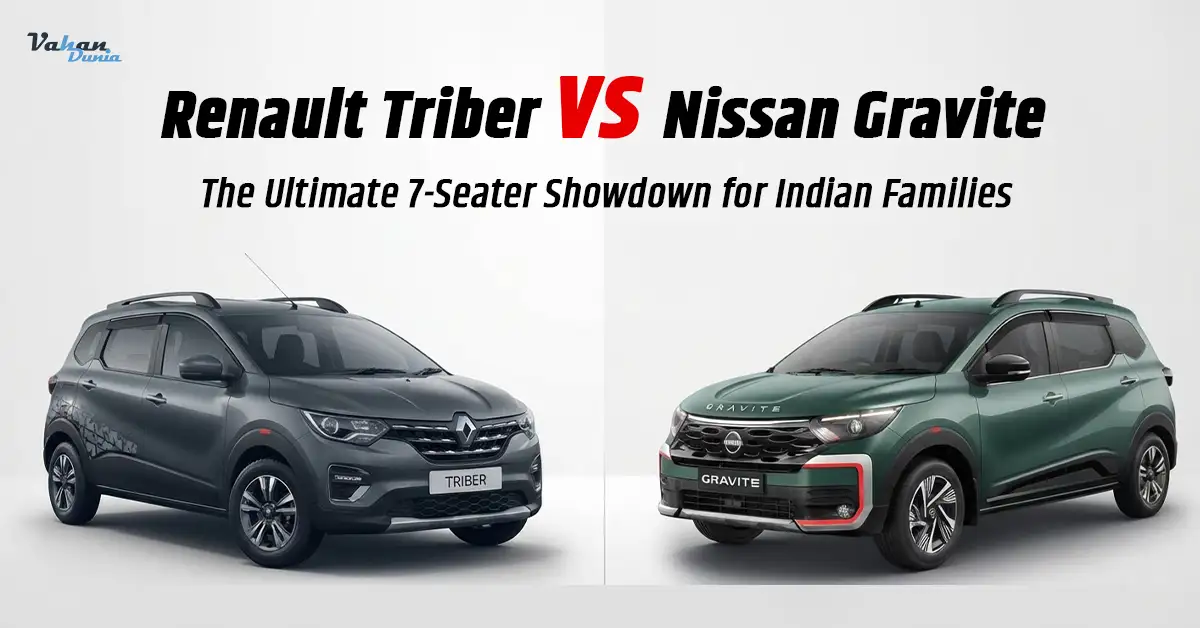
- Renault India recorded one of its best performances among the mass-market brands, as its sales grew to 3,858 units from 2,578 units in June 2025. The percentage share went up from 0.81% to 0.94%.
- Nissan Motor India sales were almost double, with 2,749 units sold in the year compared with 1,398 a year ago. Its market share grew from 0.44% to 0.67%.
Luxury and Premium Segment
- BMW India sold 1,699 cars, a 35% increase from June 2025, when it sold 1,327 units, and commands a market share of about 0.41%.
- The Mercedes-Benz Group achieved a production volume of 1,608 units, a figure that is 95 units higher than last year's. Sales rose, but its overall market share dropped slightly from 0.47% to 0.39%.
- The emergence of a new type of manufacturing. A new manufacturing type has emerged.
- In June 2026, VinFast Auto India introduced its cars in the Indian car market with 1,404 vehicles, owning 0.34% of the market.
- Stellantis Group brought in 999 units, the same market share of 0.24% as in June 2025, with 769 units.
- The performance of BYD India has been upwards, with a 375% increase in sales from 508 units a year ago to 873 units, while Force Motors has witnessed a more than doubling of sales, from 410 to 870 units.
- JLR India's vehicles recorded a slight increase from 540 units to 587 units, while the Others category dropped from 1,793 units to 1,189 units.
Conclusion
News of the month has been excellent for the Indian passenger vehicle market, which has posted 28.63% year-on-year growth in June 2026. The market leader, Maruti Suzuki, consolidated its top spot with a 40% holding, while Tata Motors was the largest among the leading brands to gain market share. Other firms that saw significant growth include Renault, Nissan, BYD and Force Motors, reflecting the ongoing growth and competitiveness of India's car industry.