
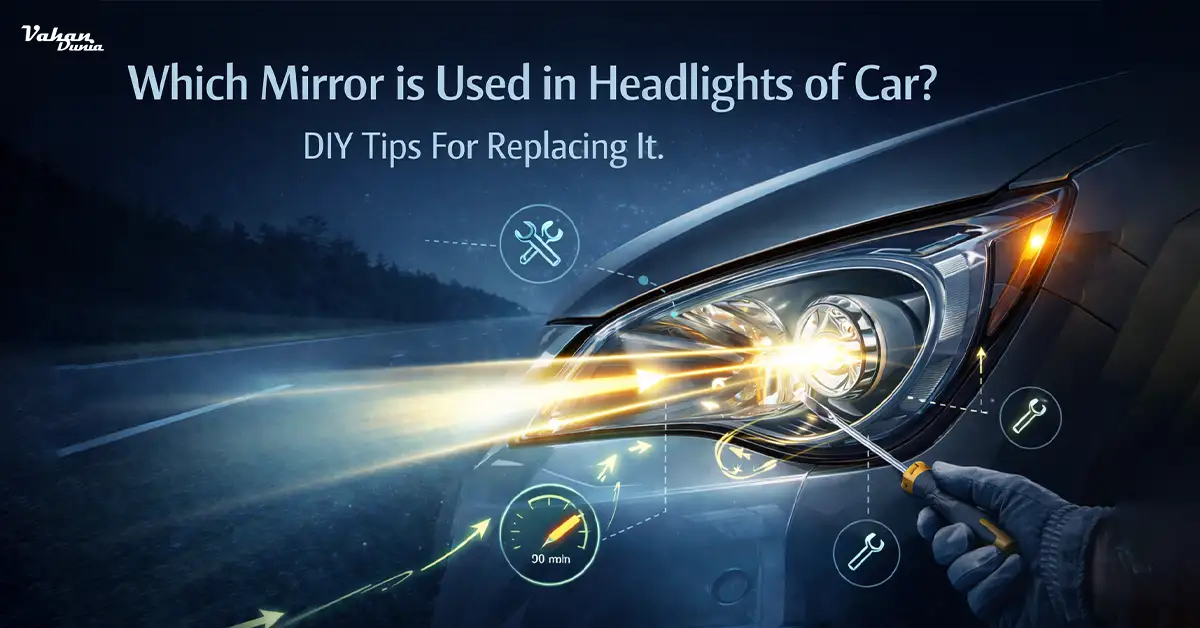
Are you curious to find out which mirror is used in the headlights of a car?
You’re not alone. It’s a common question that most car owners ask when it comes to understanding exactly what goes into making their vehicles shine so bright at night.
The blog post will analyse all aspects of automotive headlights to determine which mirror type is required for their proper operation. So if you’re eager to learn more about your car’s lights, keep reading.
The procedure for selecting which mirror will function in car headlights requires specific operational testing. The information reveals an interesting fact that most people will not find interesting enough to think about. A vehicle’s headlights use a concave mirror, which functions as a bowl-shaped inwardly curved mirror.
The mirror construction enables it to direct headlight bulb illumination into a highly focused beam of light. The concave mirror design enables light to reflect off its surface, which results in an enhanced brightness effect. The concave mirror system enables drivers to achieve clear nighttime vision, which protects their safety while driving.
The Function of the Headlight System in Cars Depends on the Use of Concave Mirrors
The headlight system of your vehicle relies on this specific design to provide essential protection for drivers who operate their vehicles on public roads.
The headlights of vehicles use concave mirrors because of their specific benefits. The system design delivers three main advantages for drivers, which include enhanced security measures, operational efficiency and better sight distance.
The advantages of this system require us to examine them more thoroughly.
Safety
Bright Headlights are also important when you are driving at night or under poor visibility,y such as when there is fog or snow, so that other vehicles can be able to see you. It is here that concave mirrors come in.
The bended surface reflects the light more productively as compared to flat surfaces, and produces a much brighter light without additional power from your battery or engine.
This results in enhanced visibility and valuable safety advantages, including being noticed sooner by other road users during the night and in poor weather situations.
Performance
In addition to enhancing the brightness of your car headlight system by adding concave mirrors, it will enhance your fuel efficiency since it can bend the light most efficiently with minimum energy wastage.
This will save on power and, at the same time, provide you with the best lighting when you are driving in dark areas.
It is safer, therefore, but also gives an added benefit in fuel economy because it makes the automakers utilise their onboard lighting systems more efficiently.
Improved Visibility
Concave mirrors offer wider angles in reflection of light, and this offers better coverage as compared to conventional flat headlights designs.
It also results in better visibility of vehicles driving in dark places or rough landscapes with more precision and accuracy than conventional lighting systems.
All in all, there are numerous benefits to applying the technology of a concave mirror in the headlights of your car, regardless of the time of day or night.
Headlights, Mirror Cleaning,g and Maintenance.
Maintaining and cleaning your headlightand s mirrors is one of the things you should do to ensure your car is safe and roadworthy.
Clean headlights can also make your car look good, besides allowing you to see betterone dark roads. The following are some of the tips for cleaning and maintaining your headlight mirror in the proper way.
Wash with Soap and Water often.
Begin by washing the lens surface with a mild soap or glass cleaner to get the dirt, debris, or any stuck residue off the lens surface. Clean it with the microfiber cloth lest you scratch the lens coating.
Purchase a UV Protective Coating.
Protective finishes can be used to prevent the harmful UV rays from damaging or discolouring your headlights over time.
They can also serve as an additional barrier to such factors as bird droppings and acid rain, which may proveto bes a danger to both vehicle paintwork and plastic headlight units.
Wax Your Headlights 3 Times a Year.
Wax the interiors and the outer side of the lenses with car wax that is meant to be used on the Headlights.
This assists in preventing discolouration and build-up of oxidation, besides enhancing clarity and brightness during low-light driving.
Preferably, this is to be carried out every six months, depending on the frequency of your night driving or on a dusty road.
Apply a Rubbing Compound to Oxidation.
In case there is a headlight oxidation on the lenses, then use a headlight rubbing compound.
Acetone, alcohol, lacquer thinner or paint thinner should not be used since they can damage the lens.
Compounds applied to the surface of the headlights of contemporary plastics can slowly regain clarity without being tough enough to harm the coatings on their surface.
The other option is to purchase restoration kits that come with polishing compounds and pads.
Fit Lens Cover Where Necessary.
The lens cover can also be bent or loose due to age or the incompetence of attaching the parts of the lens, such as fog lights or LED lights.
This should be checked up as routine maintenance.
These steps will allow you to maintain the functionality and clear Headlights of your car and have increased safety on the road during the dark hours.
How to Replace a Broken or Damaged Headlight (DIY).
Replacing a damaged or broken mirror in the car headlights can be daunting to beginners, but with proper preparation and equipments it is possible.
These are the tips that can be used in practice when changing a broken headlight mirror.
Select the Appropriate Replacement Part.
Always make sure that you have the right part to replace what you are about to do.
Find a headlight assembly that will fit your car in terms of make, model, and year.
Remove Old Parts Carefully
In case of removing current parts, make sure not to destroy delicate wiring and other vehicle parts.
Plastic pry tools should be used in place of metal tools to ensure that scratches do not occur on the adjacent panels.
Wipe down All Surfaces Before Installation.
When installing the new headlight component, always clean the surfaces.
Wipe dirty surfaces, dust, oil, and so on to make the new part fit and bond.
Cleaning is generally well done with rubbing alcohol.
Disconnect Wiring
Disassemble electrical connections, e.g. wiring harness or connector, using appropriate tools.
To be on the safe side, ensure that the battery is removed before undertaking this process.
Eliminate the Current Headlight.
Open the housing of the headlights with a pry tool.
Next, take off the screws attaching the headlight mirror with an adjustable wrench or screwdriver.
Removing the old parts should be done carefully,y not to destroy the surrounding area.
Install the New Headlight
Install the new headlight assembly according to the instructions of the manufacturer.
Install it using the right screwsorr fixing mechanisms of your vehicle.
Ensure Proper Alignment
Lastly, ensure that the headlights are aligned.
Misalignment may decrease visibility and cause danger when driving at night.
Takeaway
The car headlights and mirrors are significant in terms of safety and efficiency in lighting.
Finally, the concave mirrors are utilised in the majority of those situations due to their ability to reflect and concentrate the light better than the flat mirrors.