India is introducing flex-fuel vehicles, raising a new debate among car owners. With increasing focus on ethanol-blended fuels and the government's push towards cleaner mobility solutions, many vehicle owners are wondering whether their existing cars will be able to handle higher ethanol blends in the future.
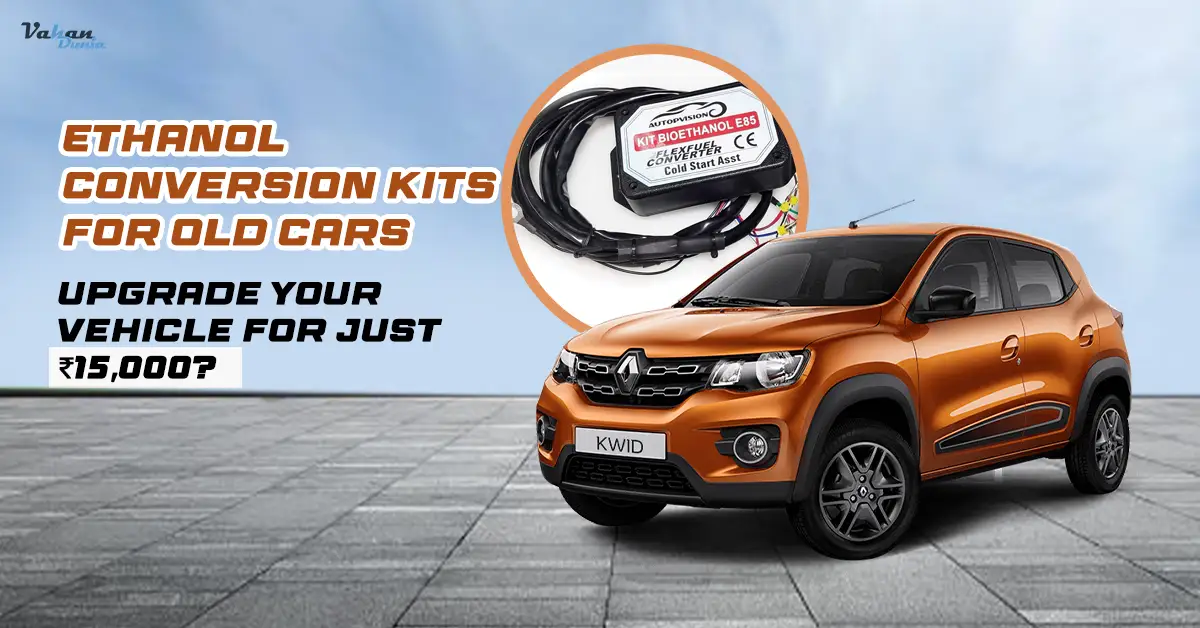
The good news is that the conversion kits for ethanol to make older vehicles capable of running on ethanol may soon be available in India, where car owners will be able to convert their own cars to ethanol, without having to buy a new one.
Ethanol Conversion Kits May Be Coming Soon!
According to industry reports, the Indian Sugar & Bio-energy Manufacturers Association (ISMA) is working towards developing ethanol conversion kits that can be used in older petrol vehicles.
The organisation thinks that the production of such kits in the country may be possible at ₹15,000, which is much cheaper than the imported kits.
At present, ethanol conversion kits are not easily available in India, and the vehicle owners who wish to modify their vehicles with ethanol conversion kits have to use imported kits, which may be quite costly.
What is an Ethanol Conversion Kit?
An ethanol conversion kit is a set of parts that can be used to modify a vehicle's engine to accommodate various fuel blends that contain ethanol.
Generally consists of:
- Ethanol content sensor
- Wiring integration (electronic control unit (ECU))
- Fuel monitoring system
- The timing adjustment mechanism of the engine.
The ethanol sensor monitors the amount of ethanol in the fuel and communicates the results to the vehicle's ECU. The ECU then alters the timing and injection timing of the fuel to maintain the same efficiency under all ethanol mixes.
This technology can be used to run vehicles on a variety of fuels, including blends with lower ethanol content up to high ethanol fuels.
Extensive Testing Conducted
ISMA partnered with experts and carried out a comprehensive testing program with imported ethanol conversion technology to assess how effective these conversion kits are.
The testing involved:
- A BS4 Maruti Suzuki Swift
- A BS6 Maruti Suzuki Dzire
Both cars were fitted with imported ethanol conversion kits and were driven for a total distance of more than 10,000km.
The latter covers fuel blends that are used in testing.
These vehicles were test-driven on:
- E15 fuel
- E20 fuel
- E85 fuel
- E100 fuel
The BS4 Swift is said to have run about 1,000 kilometres on E100 fuel, and the BS6 Dzire over 5,000 kilometres on E100 fuel.
Test Results Were Positive
The outcomes of the tests were mostly positive.
The results revealed that:
- There were no significant engine problems reported.
- There was no deterioration in vehicle performance.
- The performance of engines remained steady.
- The cars were successfully running on multiple ethanol blends.
- There were no notable abnormalities noted in testing
The tests indicated that ethanol conversion kits installed properly could have the potential to allow old cars and trucks to run safely on high-ethanol fuels.
Why Ethanol Fuel Is Important
The government has been aggressively pushing ethanol-blended petrol as a measure to cut down on crude oil imports and carbon emissions.
Ethanol-blended fuel offers several benefits, including:
- Higher fuel self-sufficiency
- Lower emissions
- Support for India's sugarcane industry
- Better energy security
- Renewable fuel promotion initiatives.
With higher ethanol blending targets, vehicle compatibility is a growing concern for vehicle owners.
Good News for BS4 Vehicle Owners
Most cars that are now BS6 compliant should be able to use E20 fuel, but many BS4 cars were designed for lower ethanol content.
Ethanol conversion kits may provide a number of advantages for these vehicles:
- Better fuel standard compatibility
- Extended vehicle life
- Minimised pressure for a quick vehicle change-out.
- High tolerance for higher ethanol blends
That may allow millions of drivers to keep driving their cars even if the ethanol level in gasoline is raised in the future.
There Is Still a Catch
The idea is good, but there are some hurdles in the way of making ethanol conversion kits available in India.
These are some of the important issues that have been raised:
- Production has not yet begun locally
- The government will need to approve and certify it to be used.
- The long-term durability test is still required.
- The price is not officially stated.
- Installation standards need to be established
As reported, the price of ₹15,000 is just an approximation and may change based on the car's type and kit level.
Are "higher alcohol" blends a concern for car owners?
- There's no need for alarm at this time.
- The majority of BS6 vehicles are E20-ready.
- Current fuel stocks remain in line with current standards.
- Ethanol conversion kits are still under development.
- Any big change will most likely occur over time.
But owners of older BS4 cars might want to pay attention to any future developments in ethanol conversion technology that could make it an affordable way to ensure compatibility with future fuel blends.
Conclusion
Ethanol conversion kits may prove to be a game-changer for Indian car owners, particularly for those who own older models of petrol cars. Upgrading existing vehicles may be much cheaper than buying new flex-fuel cars if the locally manufactured kits are available at a cost of around ₹15,000.
Although the technology has demonstrated strong results in trials, it will take more time for it to become commercially available, as it requires regulatory approval, local production, cost considerations, and long-term reliability testing. In the meantime, car owners can keep an eye on this trend as India's ethanol mobility journey continues to evolve.